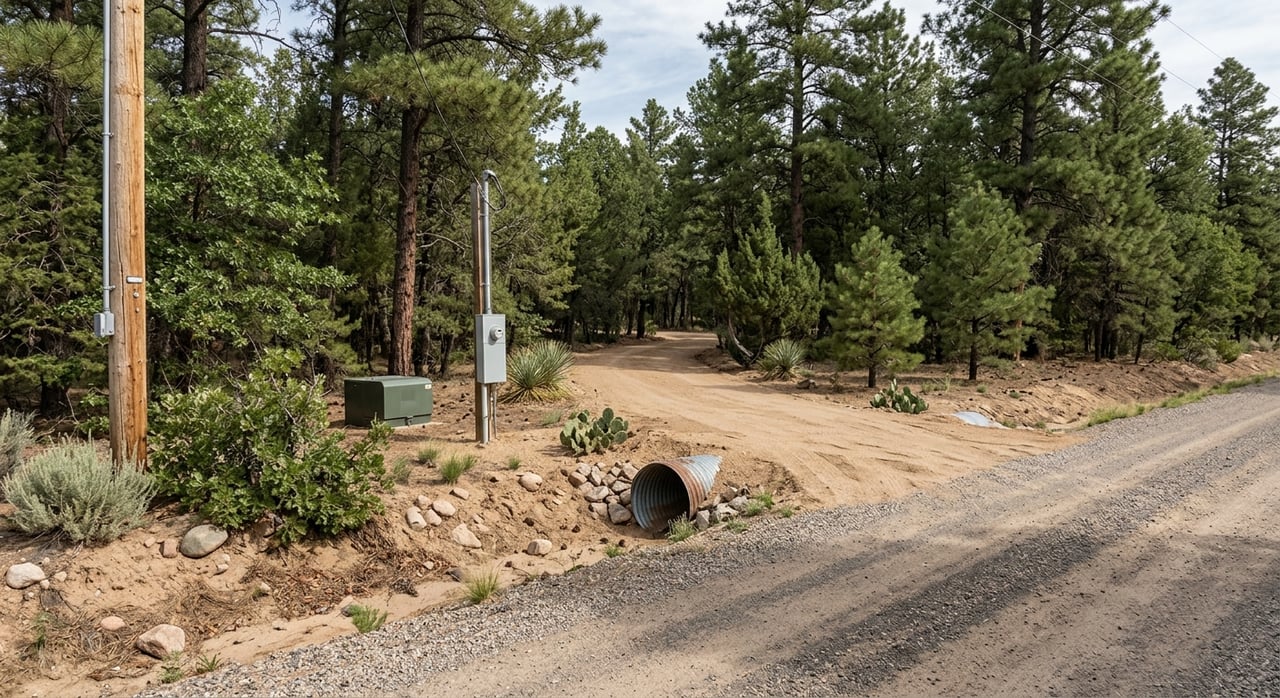
Thinking about buying land in Alto? A great view and the right acreage can be exciting, but in Alto, the real story is often in the documents. Before you make an offer, you need to know how covenants, utilities, and legal access could affect what you can build, how you can use the land, and what it may cost to get started. This guide walks you through the practical checkpoints that matter most, so you can move forward with more confidence. Let’s dive in.
Why Alto land takes extra homework
Buying a lot in Alto is not just about finding lines on a parcel map. In many cases, the property is shaped by multiple layers of rules that can affect your plans from day one.
According to the Alto Lakes Special Zoning District, the district is the local government entity with zoning jurisdiction within its defined boundaries, and its zones are generally based on subdivision covenants. That means your due diligence should include both zoning and the exact recorded rules tied to the parcel.
The other key point is that not all Alto lots operate under the same standards. The Alto Lakes Golf & Country Club membership and covenants information shows that different subdivisions may have different covenant sets, and some require Club membership. If you assume every parcel follows the same rules, you could miss a major detail.
Start with the exact covenant set
When you buy land in Alto, the most important document may be the recorded covenant set for that specific lot or tract. The Club’s unified covenants state that these rules run with the land and are enforceable by the Club and other owners.
That matters because broad assumptions can lead to expensive surprises. A listing may describe a lot as a good homesite, but the recorded covenants are what help define how that homesite can actually be used.
What covenants can control
The unified covenants say lots are generally residential in use. They also state that only one single-family dwelling is allowed per lot unless the lot is specifically designated otherwise.
The same document also gives the Architectural Control Committee the authority to approve or withhold plans based on factors like topography, lot configuration, and appearance. It also refers to square-footage requirements, which can affect whether your building plans fit the parcel.
Restrictions buyers should not overlook
Covenants can reach beyond the house itself. The unified covenants also address lot splitting, RVs and trailers, and enforcement options if rules are violated.
Those enforcement options can be serious. The covenants allow for remedies that include suspension of membership privileges and liens in some situations, which is one reason covenant review should happen before you write an offer, not after.
Check whether Club membership applies
Some Alto subdivisions require membership in Alto Lakes Golf & Country Club. The Club membership page makes clear that membership requirements can vary by subdivision.
If you are comparing multiple parcels, this is an important distinction. Membership requirements can affect your ownership costs and your overall decision, especially if you are buying a second-home lot or planning a future build.
Ask parcel-specific questions
A smart next step is to confirm:
- Which covenant set applies to this exact parcel
- Whether Club membership is required
- Whether architectural review is required before building
- Whether there are minimum size or design standards
In Alto, parcel-specific answers matter more than general expectations.
Verify zoning and allowed use
Covenants are only one part of the picture. You should also confirm whether the parcel is inside the Alto Lakes Special Zoning District and what uses are allowed there.
The district explains that its ordinance is intended to create orderly development for the defined subdivisions within its boundaries. For you as a buyer, that means a parcel’s location within or outside that district can affect what rules apply.
If you are buying with a very specific use in mind, this step is essential. Even if a property looks suitable on paper, the combination of zoning and covenants may shape what is realistically possible.
Access is more than a driveway
Legal and practical access are some of the most important parts of land due diligence in Alto. A parcel can look accessible on a map, but that does not always tell you who maintains the road, whether permits are needed, or how a driveway will be approved.
Lincoln County’s approval-to-construct and addressing packet for unincorporated areas asks whether a driveway permit has been obtained, identifies the main road off the driveway, and addresses 911 assignment. The form also notes that approval to construct can expire if work does not begin or finish within stated timeframes.
What to confirm about access
Before your offer is firm, try to verify whether access is through:
- A county road
- A platted subdivision road
- A recorded easement
- A private road
You should also ask who is responsible for grading, snow removal, and ongoing maintenance. Based on the covenant language and county paperwork in the research, these practical details can affect how usable the property really is.
Why road status affects buildability
Road standards and driveway location can directly shape your building plans. Even if the lot size works for your goals, access conditions may limit where a home, garage, or other improvements can realistically go.
The unified covenants also state that platted access roads must be installed in accordance with Lincoln County subdivision regulations. That is another reason to look beyond the map and into the actual access documents.
Understand water service before you buy
Water is one of the first utility questions to answer when buying land in Alto. Some properties may be served by a public system, while others may need a private well.
The Alto Lakes Water & Sanitation District listing identifies it as an active water system in Alto, Lincoln County. Its role matters because being near the system is not the same as having confirmed service available to your parcel.
If the lot is on district water
If a lot is connected or eligible for service, you still want to confirm:
- Tap availability
- Connection costs
- Whether wastewater service reaches the parcel
- Any timing or approval steps for hookup
That last point matters because the unified covenants state that if sewer is laid in an abutting street, easement, or public right-of-way, the owner must connect.
If the lot will need a well
If the property is not on community water, private well rules come into play. The New Mexico State Engineer well brochure says you need a permit to drill before drilling a well, and wells must be drilled by a licensed well driller.
The brochure also explains that domestic use generally includes household purposes, noncommercial watering of animals, and up to one acre of noncommercial landscaping. If your long-term plans depend on a private well, it is wise to understand those limits early.
New Mexico health officials also note that private well testing is the owner’s responsibility and that many contaminants cannot be detected by taste or smell. So if a property already has a well, testing and documentation should be part of your review.
Know the wastewater path
Wastewater planning is another major part of Alto land due diligence. Depending on location, a parcel may connect to sewer or rely on an onsite wastewater system.
The unified covenants tie some lots directly to sewer availability by requiring connection when sewer is laid in an abutting street, easement, or public right-of-way. That means a parcel’s current setup may not tell the full future story.
If the property uses septic
For septic systems, the New Mexico Environment Department regulates onsite wastewater systems statewide. Its property transfer evaluation guidance says existing systems should be evaluated at transfer, and unpermitted systems may need registration or permitting after inspection.
If the lot already has a septic system, ask whether there is a permit file and whether a recent transfer evaluation has been completed. If the property is unimproved, you will want to understand what approvals may be needed before installation.
A practical Alto land checklist
If you are serious about a parcel, these are the questions worth answering before you commit:
- Which recorded covenant set applies to this exact lot or tract?
- Does the parcel require Alto Lakes Golf & Country Club membership?
- Is the property inside the Alto Lakes Special Zoning District?
- What uses are allowed under the applicable zoning and covenants?
- Is legal access clearly established?
- Has driveway permit or address paperwork been completed, if needed?
- Is water available through the Alto Lakes Water & Sanitation District?
- If not, what will be required for a well?
- Will the property connect to sewer, or will it need septic?
- If septic already exists, is there a permit record and transfer evaluation?
Why document-driven buying matters in Alto
In Alto, land buying is often less about assumptions and more about verification. Acreage, trees, and views may get your attention first, but the documents are what tell you how the property may function in real life.
That is especially true if you are planning a custom build or buying from out of the area. The most helpful approach is to verify covenants, zoning, access, water, and wastewater options before you lock yourself into a deal.
If you are weighing Alto land and want practical guidance on what to review before you offer, Keli L Cox can help you navigate the local details and evaluate properties with a clear, land-focused perspective.
FAQs
What covenants should you review before buying land in Alto?
- You should review the exact recorded covenant set that applies to the parcel, because Alto subdivisions may have different rules on use, building standards, Club membership, and architectural approval.
What does access mean when buying an Alto land parcel?
- Access means more than seeing a road on a map. You should confirm whether the property is served by a county road, subdivision road, easement, or private road, and who handles maintenance, grading, and snow removal.
What utility questions should you ask before buying land in Alto?
- You should ask whether the parcel has access to the Alto Lakes Water & Sanitation District, whether sewer is available or required, and if not, what will be needed for a private well and septic system.
What should you know about wells when buying land in Alto?
- If the property is not on community water, New Mexico requires a permit before drilling a well, and wells must be drilled by a licensed well driller. If a well already exists, testing is the owner’s responsibility.
What should you confirm about septic before buying an Alto lot?
- You should confirm whether there is an existing septic permit file, whether a transfer evaluation has been completed, and whether the parcel may need new permitting or inspection through the New Mexico Environment Department.
Why is zoning important when buying land in Alto?
- Zoning helps determine what uses are allowed on the parcel. In Alto, you should confirm whether the property is inside the Alto Lakes Special Zoning District and how zoning works alongside the recorded covenants.